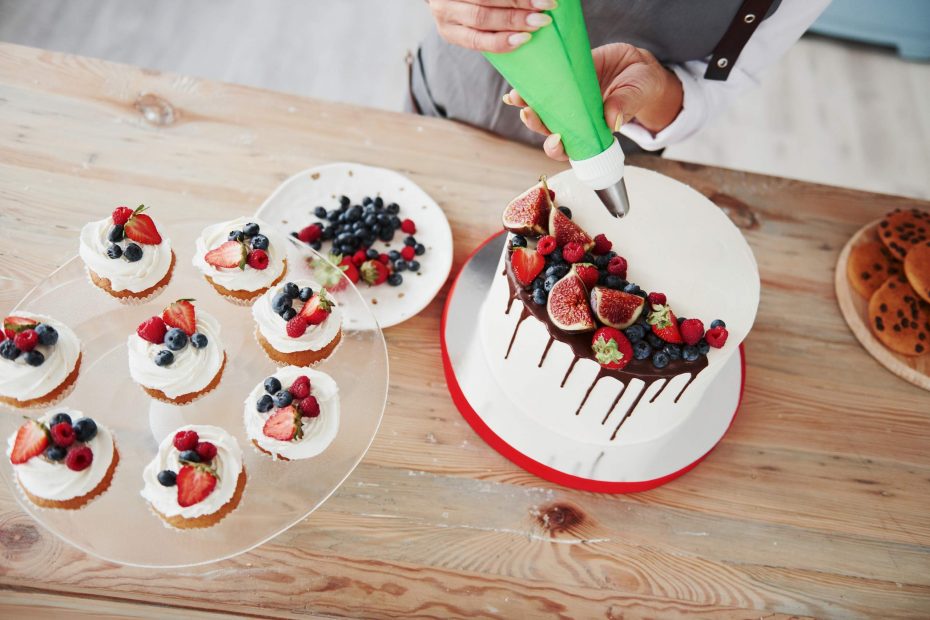
Cake decorating is an art form, but it’s also quite technical. It might look straightforward on TV, but getting the desired results requires the right consistency, temperature, equipment, and technique. Making mistakes is natural and expected. However, knowing what the most frequent errors are will help you learn faster and give you confidence in every cake that you decorate.
1. Decorating While the Cake is Still Warm.
One of the most common beginner mistakes is decorating a warm cake. A warm cake will melt the frosting, cause the layers to slide, and make it very difficult to get a clean finish. Always ensure that the cake has cooled completely before frosting. If necessary, chill the cake to make it easier to work with.
2. Not Applying a Crumb Coat.
When frosting a cake, crumbs are likely to get caught up in the final layer of frosting. To prevent this, apply a thin crumb coat before your final layer of frosting. Then chill the cake until the crumb coat is set.
This will help keep the cake looking much cleaner.
3. Not Getting the Right Consistency of Frosting.
If your frosting is too soft, it will slide off the cake, and the shape of your piped designs will melt as well. On the other hand, if your frosting is too firm, it will be harder to spread, and your edges may appear rough. The right consistency depends on the techniques you are using, so keep in mind that you will need a different consistency for a smooth coating, detailed piping, and flowers.
4. Applying Too Much Pressure When Piping.
New bakers often try to squeeze too hard with their piping bag in order to create a more defined decoration. Squeezing too hard results in a larger and uneven shape. Instead, focus on applying even, gentle pressure and moving your piping bag at the same speed. The key is control over the amount of pressure applied.
5. Obsessing Over Flaws.
When decorating a cake, it’s easy to focus on minor flaws. If there’s a slight imperfection on the edge of the cake or your decorations don’t look identical, you might assume that the cake is a failure. Touching your cake too much will only make it worse. Step back and look at your cake from a distance instead of just staring at it from a few inches away.
6. Overdecorating.
It seems like adding more details will make your cake look more interesting, but it can end up looking too cluttered. Too many flowers, colors, patterns, and textures can all compete for attention. Choose a center of interest and let your other decorations complement that point. A cohesive cake is much more satisfying to look at than a crowded one.
7. Not Considering Proportion.
Your decorations should be the appropriate size for your cake. Small details on a large cake will be unnoticed, and large decorations will dominate a small cake. Before placing your decorations, hold them up to the cake to see how they relate in size to the rest of your cake.
8. Trying a New Technique on Your Final Cake.
It’s tempting to practice a new technique on an important cake if you saw something impressive online. However, practicing first can help you avoid disaster. Test your technique on another surface first so you’ll know what to expect before you put it on your final cake.
Learning from Mistakes.
Making mistakes is not proof that you’re a bad decorator. Mistakes are valuable lessons. If your frosting slides off, then you’ve learned that you need a stiffer consistency. If your piping is uneven, then you’ve discovered where you need to practice more. If your cake looks too crowded, then you’ve learned that you’re making it too complicated. Mistakes help us grow.
Final Thoughts.
Cake decorating is an art that requires time and practice. You won’t be a master on your first attempt, but that’s okay. Stick to the fundamentals by working with a cooled cake, creating the right consistency of frosting, practicing your piping, keeping your proportions in mind, and maintaining balance in your decorations. As you get better, you’ll find that you’ll spend less time trying to avoid mistakes and more time problem-solving.